
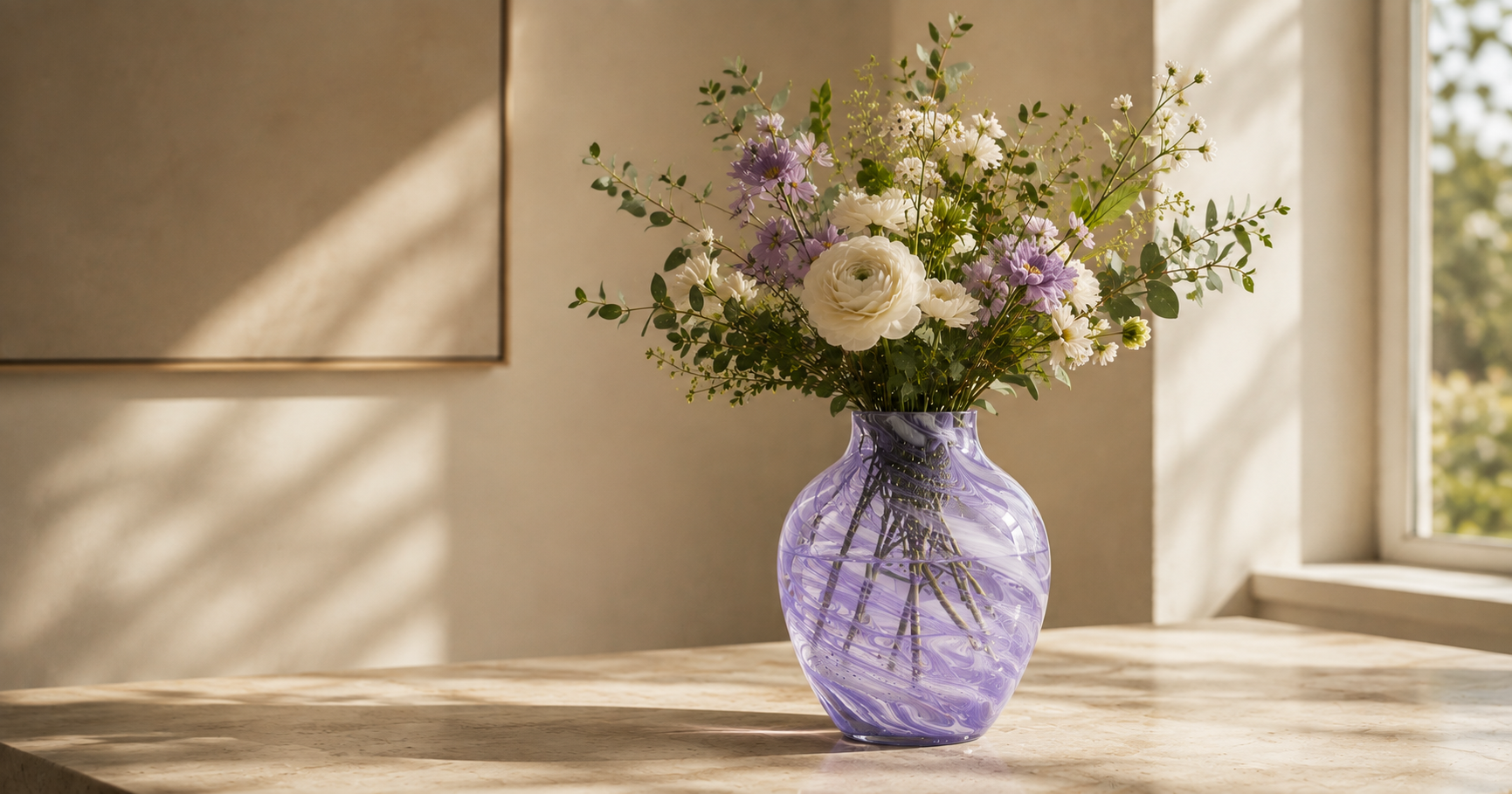
This is a different problem from cloudy glass. Cloudy glass is mineral deposit sitting on the surface of the vessel itself — a separate issue with its own fix. This is about what's happening in the water: it starts clear on day one and by day three or four has turned faintly green, slightly cloudy, or visibly murky, with nothing added to it except flowers.
What's actually causing it
The main culprit is almost always organic matter breaking down in the water — specifically, any leaves or foliage sitting below the waterline. Submerged leaves decompose faster than you'd expect, and as they break down they feed bacterial growth, which is what actually turns the water cloudy and eventually gives it that faintly unpleasant smell that shows up around the same time. Stem tissue itself contributes too, but leaves are the bigger factor, simply because there's more surface area breaking down at once.
Warmer water accelerates all of this considerably, which is why the same arrangement in a sunny room clouds faster than one in a cooler spot.
Why glass makes this more noticeable, not more common
Murky water happens in every vase, regardless of material — an opaque ceramic or cement vessel has exactly the same bacterial process going on inside it. The difference is purely visual: glass shows you what's happening, and opaque materials hide it. That's worth sitting with for a second, because it cuts against the instinct to blame the glass itself. A vessel you can see into isn't dirtier than one you can't; it's just more honest about a process that's happening either way.
What actually slows it down
Strip every leaf that would sit below the waterline before the stems go in. This is the single biggest factor, by a wide margin — far more effective than any additive.
Change the water every two to three days, rather than only topping it up as it evaporates. Topping up dilutes the problem without removing the organic matter that's already breaking down.
Use clean, sharp scissors rather than dull ones when trimming stems — a crushed stem end decomposes faster and releases more organic matter into the water than a clean cut does.
Keep the arrangement out of direct, warm sunlight where practical — the same light that makes an arrangement look good also accelerates the bacterial growth turning the water cloudy underneath it.
Commercial flower food, if you use it, is doing real work here — it typically combines a mild acidifier, a sugar source for the flowers, and an antibacterial agent that specifically slows the process described above. It's not just marketing.
When it's worth just accepting
Even with all of the above, water in a vessel holding cut flowers for a full week or more will generally cloud somewhat — this is a genuinely unavoidable part of how cut flowers behave, not a sign you're doing something wrong. The goal with the steps above isn't zero cloudiness; it's pushing the timeline out further, so an arrangement that would cloud by day three instead holds clear water until closer to day six or seven.