
Art Deco Vases in Soft Modern Rooms: Geometry Without the Costume Party
An art deco vase can steady a soft modern room—or dress it like a set. The difference is rarely “more gold.” It is silhouette, scale, and how much geometry the furniture will tolerate before the room starts performing.
This is a calm collections / styling guide for overseas B2C readers who want art deco home decor that still lives with linen sofas, low light, and unfinished weekends. No costume-party décor. No invented SKUs. Materials language stays with Brutaluxe Approved Terms: cement, glass, ceramic—care at a high level only.
What “art deco vase” usually means (without museum voice)
In shopping language, art deco vase usually points to a small set of visual cues—not a museum checklist:
- Geometry over flourish. Facets, stepped profiles, sunburst suggestions, strong verticals, or clean oval volumes that feel intentional rather than rustic.
- Silhouette first. The outline should read from across the room. Detail that only works at six inches is jewelry, not décor architecture.
- A measured metallic or contrast note. Brass, chrome, smoked glass, or a dark rim can nod to the era. Full theatrical gilding is optional—and often the first thing that fights a soft room.
- Presence without narrative overload. The best pieces reference the period’s confidence in form. They do not require a themed sideboard to make sense.
Vintage art deco vases and contemporary pieces that borrow the language both belong in this conversation. What matters for soft modern rooms is not authenticity theater; it is whether the object can share air with rounded upholstery and quiet walls.
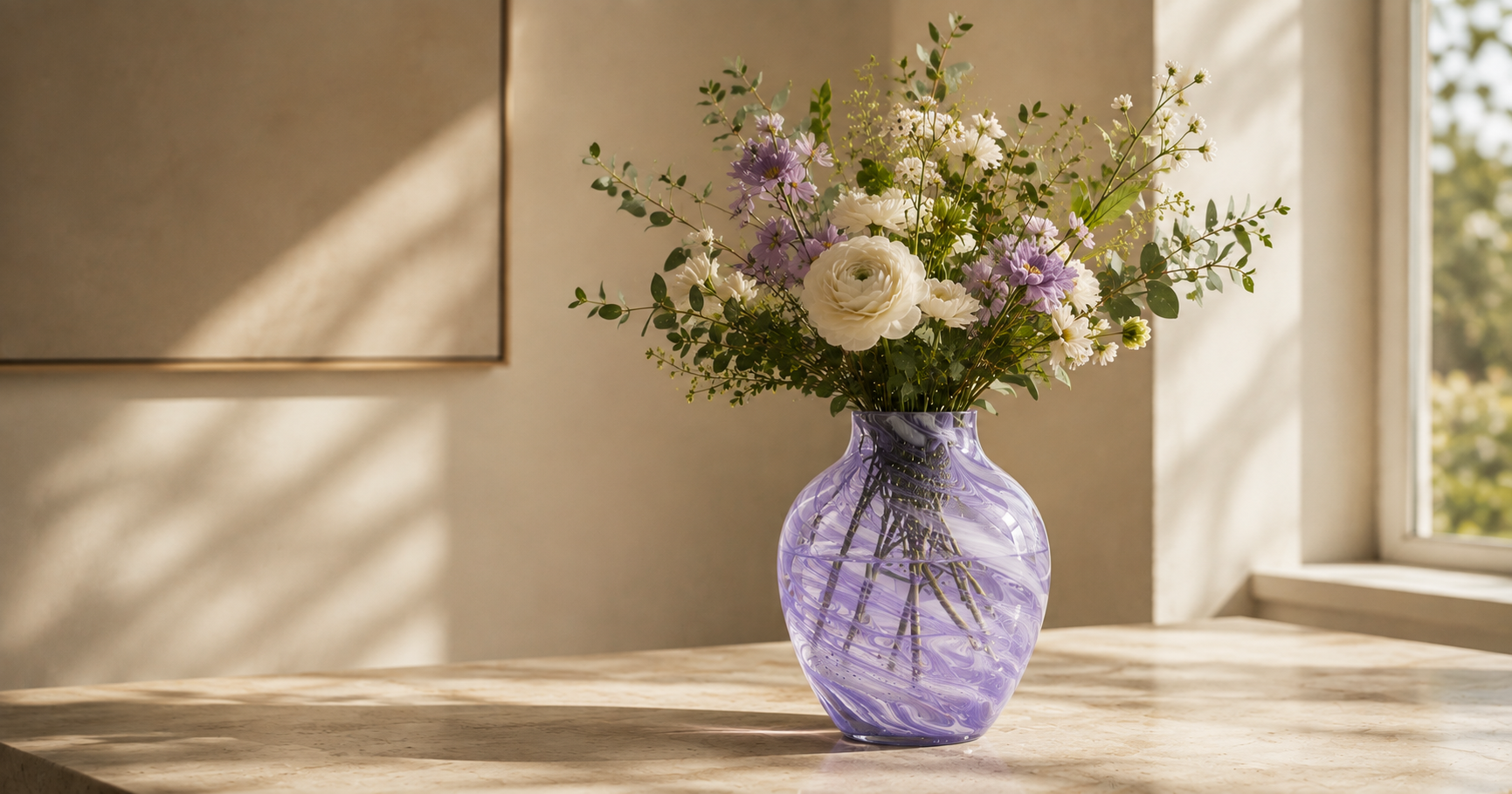
Glass art deco vase shapes—clear, tinted, or softly mirrored—often land more gently than heavy ornament. Cast mineral pieces (Brutaluxe speaks in cement, not concrete) bring mass and matte calm; they read deco when the silhouette is disciplined, not when the surface is busy.
Soft modern rooms: where geometry helps vs where it fights
Soft modern usually means: rounded seating, textile calm, restrained palettes, lamps that diffuse rather than spotlight. In that context, geometry is a seasoning.
Geometry helps when:
- The room already has too much visual “mush”—similar soft shapes repeating with no counter-form.
- You need a vertical accent on a low console or mantel without adding another plant story.
- Negative space is generous; one crisp object can act as a period note without becoming a theme.
Geometry fights when:
- Every surface already holds angular frames, sharp lamps, and graphic rugs—the vase becomes another edge in a room of edges.
- The palette is already high-contrast chrome-and-black; adding a loud deco metallic tips the room into costume.
- The furniture is delicate and pale, and the vase is oversized and declarative—the scale argument alone will spoil the calm.
A useful test: photograph the room from the doorway. If the vase is the first thing you notice and the sofa becomes background, the object is styling the set. If the sofa still leads and the vase clarifies the composition, you are in soft modern territory.
Art deco decor works best here as a single clear decision, not a matching suite. One strong vase plus quiet neighbors beats a tableau of fans, figurines, and mirrored trays.
Scale and negative space for a single object
Choose silhouette first—finish second. Then check scale.
- Height vs furniture. On a console, the vase should relate to the furniture’s mass. Tiny deco objects disappear; oversized towers bully soft seating nearby.
- Width and breathing room. Leave empty surface on at least one side. Soft rooms need air; geometry needs a frame of nothing.
- Pairs carefully. Two identical deco forms can look like retail display. A single hero, or a deliberate tall/short contrast with one quieter partner, usually reads more lived-in.
- Flower load. Sparse stems or dried structure respect faceted glass and stepped necks. Overflowing supermarket bouquets erase the silhouette you paid for.
Negative space is not emptiness for its own sake. It is how an art deco vase keeps its outline. Crowding is how it becomes “stuff.”
Materials pairing (glass vs ceramic vs cement) — care at a high level
Material choice changes how deco geometry behaves in soft light.
- Glass. Catches and moves light; good when the room needs a quiet sparkle without metallic shout. Clear or softly tinted forms keep modern rooms from tipping into period pastiche. Care stays simple: gentle cleaning, avoid harsh abrasion; treat inserts as the water-holding part when a design uses them.
- Ceramic / stoneware. Warmer, more grounded; deco cues come from profile and glaze restraint rather than shine. Pairs easily with textiles.
- Cement (Approved Term). Mass, matte quiet, light absorption. A cement body can feel contemporary and architectural while still hosting a geometric silhouette. Care note only: soft damp cloth; avoid abrasive cleaners, acids, and soaking so the matte surface stays calm. Where a glass insert is part of the design language, it is the practical water vessel—keep mineral care on the insert, not on the cement shell.
Brutaluxe collections are organized around honest materials and quiet volumes—glass forms, mineral surfaces, ritual-scale objects—rather than costume themes. Shop the silhouette against your room; do not invent a product name to force an “art deco SKU” story. Browse live forms at bruta.luxe (https://bruta.luxe). Shared Color Object checkout is intentional; there is no separate flagship-checkout mythology to invent.
Giftability and when to choose quieter forms instead
An art deco vase is a strong gift when the recipient already likes geometry, or when their room needs one clarifying object. It is a weak gift when their space is already themed, or when they prefer soft organic pottery exclusively.
Choose quieter forms instead when:
- The room’s calm is the point (bedroom corners, meditation-adjacent spaces, nursery-adjacent shelves).
- The recipient dislikes metallics or period references.
- You are unsure about scale—quieter volumes forgive more.
Giftability improves when the object is repair-minded and easy to live with: replaceable or cleanable water-facing parts, surfaces that accept time without demanding polish rituals. That is domestic luxury, not display anxiety.
Closing
Art deco vase styling in soft modern rooms is a discipline of restraint: geometry as accent, silhouette before finish, scale before shine. Reference the era’s confidence in form. Skip the costume party.
When you are ready to look at material objects for quiet rooms—cement, glass, ceramic—start at bruta.luxe (https://bruta.luxe).