
How to Style a Vase Without Flowers
A room-by-room guide to styling an empty vase so its form, material, and placement do the visual work.
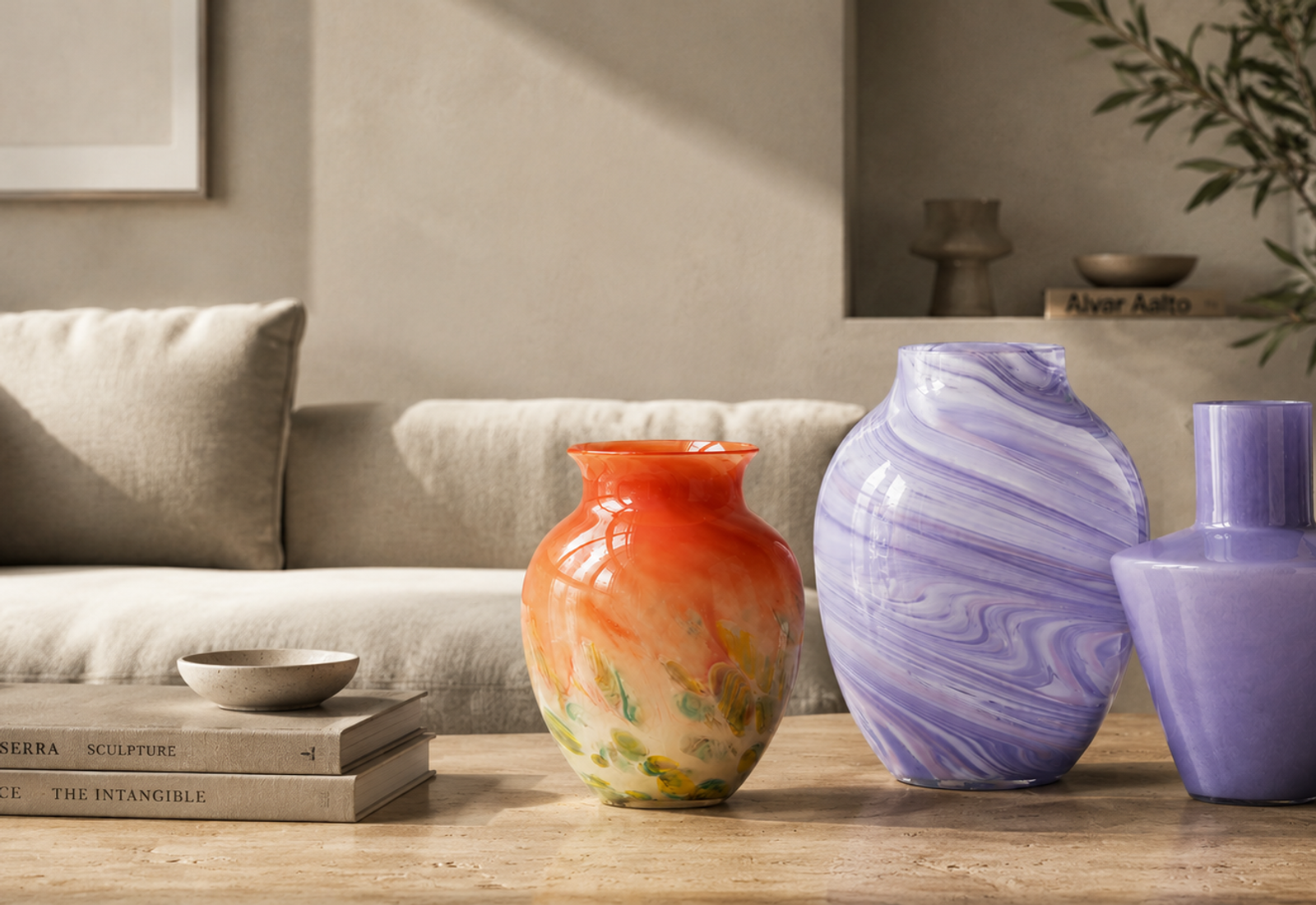
"Style a vase without flowers" is one of the most-searched vase questions there is right now — which tells you something: a lot of people own a vase they love and genuinely don't know what to do with it most of the year. Here's the room-by-room version of the answer.
## The core idea, before the specifics
A vase only needs flowers if its own form doesn't hold visual interest on its own. If it does — a considered silhouette, an interesting surface, colour that changes with light — the empty vessel is already doing the job flowers would otherwise be doing.
## On a console or entry table
Give it space rather than company. Position a single vessel slightly off-centre. Let it be the tallest element, with other objects kept lower so it reads as the anchor.
## On a shelf
Pair the vase with one or two objects at different heights, such as books or a small sculptural piece. Grouping reads as curated; an empty vase alone on a bare shelf can look forgotten.
## On a dining table
Keep an empty vase low enough to function as a centerpiece rather than an obstruction, and let its own material and form do the work.
## On a mantel
A mantel is forgiving because the fireplace and artwork already provide context. A single vase can be the whole statement if its scale suits the mantel.
## As part of a corner or floor moment
Pair an empty floor vase with nearby height variation — a plant, leaning mirror, or stack of art — so it reads as part of a considered corner.
## The three habits that make empty styling actually work
Vary height when grouping. Use odd numbers for groups larger than one. Give the vase more breathing room than you think it needs; clearing space usually makes it feel deliberate.
For the argument behind why a vase should be designed to work this way, see The Case for a Vase You Never Put Flowers In. For sizing specifics by location, see What Size Vase Do You Actually Need.